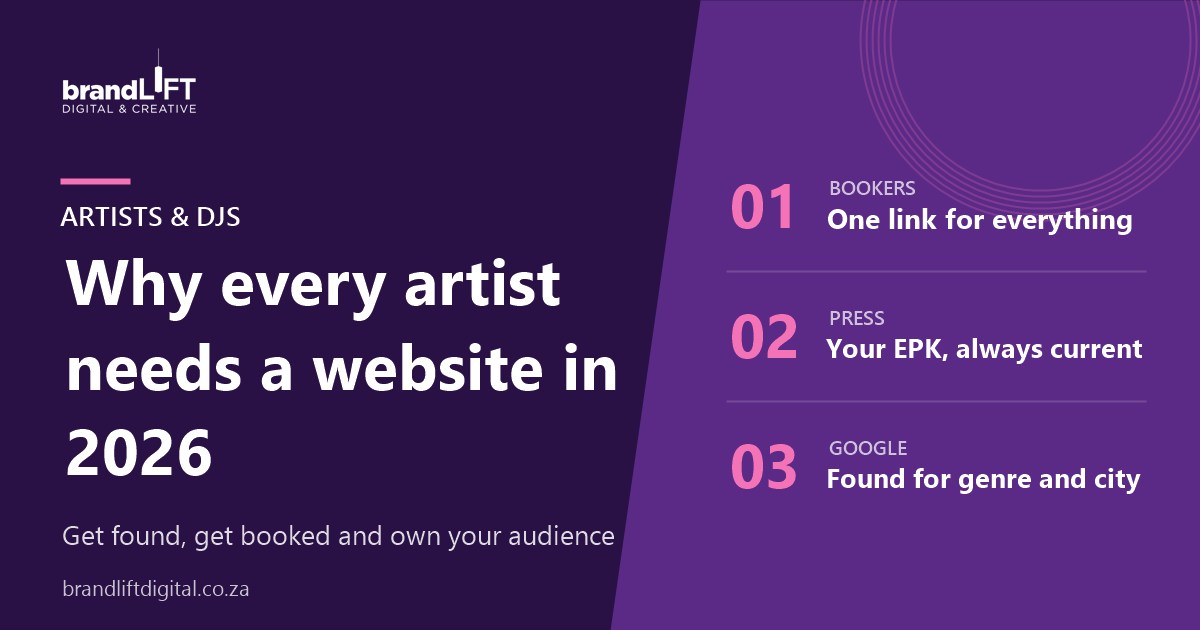
If you’re a DJ, producer, vocalist or band, an artist website is the one place online you fully control. Your Instagram, TikTok and Spotify profiles help people discover you, but they’re rented space with rules you don’t set. In 2026, the artists getting the steady bookings make it easy for promoters, events managers and fans to hear their sound, check their dates and get in touch, all behind one link. Here are eight reasons it’s worth having your own site, and what to put on it.
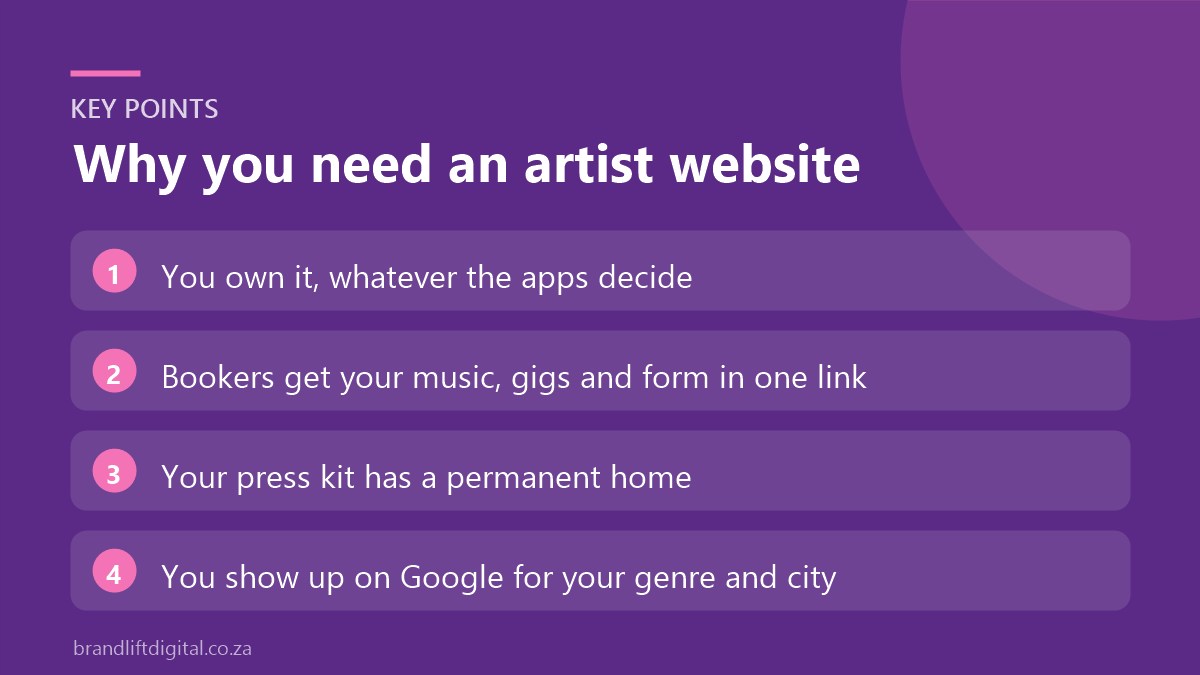
1. You own it, whatever the apps decide
Social platforms change their algorithms, cut your reach and occasionally lock or lose accounts. Years of posts can stop reaching the people who follow you overnight. Your website stays where you put it, on a domain with your name, and nobody else decides who gets to see it. Think of socials as the flyers and your website as the venue.
2. Bookers want one link, not five
An events manager planning a year-end function, or a promoter putting together a line-up, is usually comparing several artists at once. If your music is on Spotify, your mixes on YouTube, your dates on old flyers and your rates in the DMs, you’re asking them to do the work. A website puts it all on one page they can share with their team or client.
3. Your press kit has a permanent home
Festivals, radio stations and media ask for an electronic press kit (EPK): your bio, press photos, releases and highlights. Instead of digging through your phone for the latest version every time, keep a press page on your site with a download button. When something changes, you update it once and every future request gets the current version.
4. People search Google for what you do
Clients who don’t know your name yet search for what they need: “Afro House DJ in Pretoria”, “wedding band Cape Town” or “MC for a corporate event”. Social profiles rarely show up for those searches. A website with pages about your genre, the events you play and the areas you cover gives search engines, and the AI assistants that draw on them, something to point to. Our guide on how long SEO takes explains what to expect.
5. A gig guide that does your promotion
A gig guide shows fans where to catch you next, with the flyer, venue, directions and ticket link in one place. Your past gigs matter just as much: a list of festivals, clubs and corporate events you’ve played is proof for the next booker that you can handle the room.
6. Better enquiries, less back-and-forth
“How much for Saturday?” in a DM tells you almost nothing. A booking form can ask for the date, venue, type of event, number of guests and whether they need sound equipment too. You get enquiries you can actually quote on, in your inbox, and you can reply faster to the ones that fit.
7. Room for more income streams
Many artists earn from more than performing. Your site can sell merch through a small online shop, promote sound or equipment hire, or take enquiries for studio sessions, lessons or hosting. Each gets its own page, so a client who came for one service can discover the others.
8. You control the story
Your website is where you tell people who you are, where your sound comes from and what you stand for, in your own words and your own brand colours. A professional site also signals that you take your career seriously, which matters to corporate clients and brands deciding who to trust with their event.
What should an artist website include?
You don’t need everything on day one. Start with the essentials and add pages as your career grows.
| Page | What it does | When |
|---|---|---|
| Home | Who you are, your sound and a clear “Book me” button | Day one |
| Music & mixes | Releases and sets with links to streaming platforms | Day one |
| Gig guide | Upcoming dates and the shows you’ve played | Day one |
| Bookings | A form that collects the details you need to quote | Day one |
| Press / EPK | Bio, press shots and a downloadable press kit | Next |
| Gallery & videos | Live shots and footage that show your energy | Next |
| Blog | Gig recaps and release news that help you get found | Later |
| Shop / services | Merch, sound hire, lessons or studio time | Later |
For a real example, see how we built a booking-ready website for DJ La Vita, a Pretoria Afro House and Deep House DJ. It brings her releases, mixes, gig guide, press kit, sound hire and booking form together on one site.
Artist website: frequently asked questions
Isn’t a link-in-bio page enough?
A link-in-bio page is a useful signpost, but it’s still a list of links to other platforms. It doesn’t show up in search, can’t hold your press kit or gig history properly, and doesn’t collect structured booking enquiries. Many artists use both: the bio link simply points to their website.
How much does an artist website cost?
A custom site of about five pages typically costs R10,000 to R25,000, and larger sites with a press page, blog and shop R30,000 to R60,000. Our website cost guide explains what affects the price.
How often should I update it?
Add gigs and releases as they’re confirmed, and review your bio and press kit every few months. A site that lists last year’s dates as “upcoming” does more harm than good. If you’re short on time, a care plan can cover updates for you.
Ready to get booked from your own website?
Our DJ and artist website design service builds sites with booking forms, gig guides, music players and press pages, set up so you can update them yourself. You can also see our WordPress website design service or our personal brand websites.